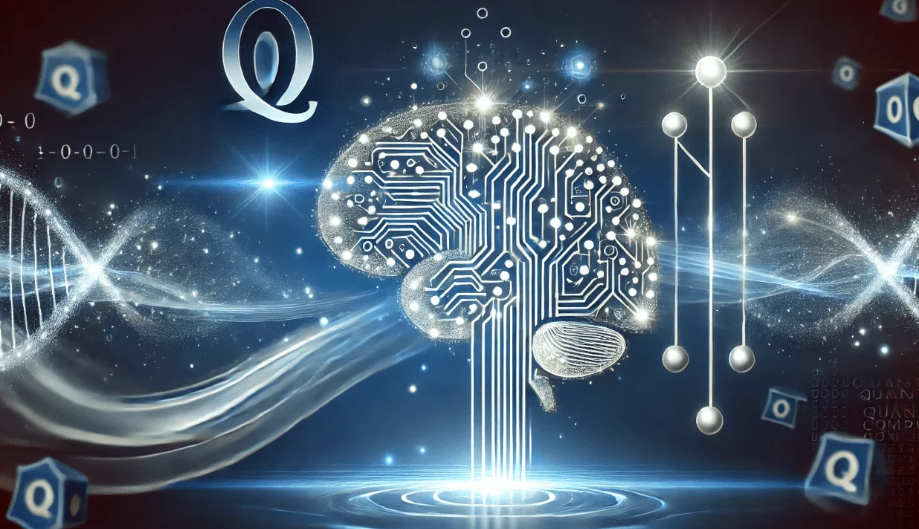
Quantum technology promises a significant paradigm shift in artificial intelligence. By harnessing the unique properties of quantum computing, AI systems can enhance their data processing capabilities. This advancement may lead to improved learning processes and predictive accuracy, addressing the limitations of current AI frameworks. As the intersection of these two fields evolves, the potential for innovative applications becomes increasingly apparent, suggesting that the future of AI could be far more complex and capable than previously imagined.
The Basics of Quantum Computing and AI
Quantum computing represents a significant paradigm shift in the computational landscape, leveraging the principles of quantum mechanics to process information in fundamentally different ways than classical computers.
This new approach utilizes quantum bits, or qubits, which enable simultaneous processing of multiple states, thereby increasing computational power. Such advancements challenge the limitations of classical computing, offering unprecedented possibilities for complex problem-solving and data analysis.
See also: How Renewable Energy Technology Is Evolving
Enhancing Machine Learning Capabilities
As classical machine learning algorithms grapple with the complexities of high-dimensional data, the integration of quantum computing offers a transformative approach to enhance their capabilities.
Quantum algorithms enable faster data processing, allowing for more efficient handling of complex datasets. This advancement not only improves predictive accuracy but also accelerates learning processes, ultimately empowering AI systems to function with unprecedented efficacy and adaptability.
Overcoming Current Limitations in AI
Despite significant advancements in artificial intelligence, several limitations persist that hinder its full potential.
These challenges include inadequate data processing capabilities and the inability to manage complex computations efficiently.
Quantum technology offers a quantum advantage by facilitating faster data processing, thereby enabling AI systems to analyze vast datasets more effectively.
This could ultimately bridge current gaps and enhance AI’s overall performance and adaptability.
Future Applications and Innovations in AI
The integration of quantum technology into artificial intelligence is poised to unlock unprecedented innovations and applications across various fields.
Quantum algorithms will enhance machine learning capabilities, enabling real-time processing of vast datasets. This advancement could revolutionize sectors such as healthcare, finance, and logistics, facilitating more accurate predictions and decision-making.
Ultimately, the fusion of these technologies promises to redefine the boundaries of AI potential.
Conclusion
In conclusion, the integration of quantum technology into artificial intelligence heralds a new epoch, reminiscent of the leap from the abacus to modern computing. By harnessing quantum algorithms, AI will not only enhance machine learning capabilities but also surmount existing limitations, paving the way for unprecedented applications across diverse sectors. As this technological evolution unfolds, the synergy between quantum computing and AI will likely redefine problem-solving paradigms, ultimately fostering innovations that were once confined to the realm of science fiction.